Finlandia Hall is a central event venue in Helsinki, located on the shore of Töölönlahti, known for its modern architecture and excellent acoustics. It offers versatile spaces for both international and domestic conferences, concerts, and cultural events.
The purpose is to develop a robot for Finlandia Hall that can autonomously retrieve chairs from storage and deliver them to predetermined halls. Different existing warehouse logistics solutions will be explored, and a working solution will be developed for Finlandia Hall.
Technologies: Robotics, CAD, automation, LiDAR
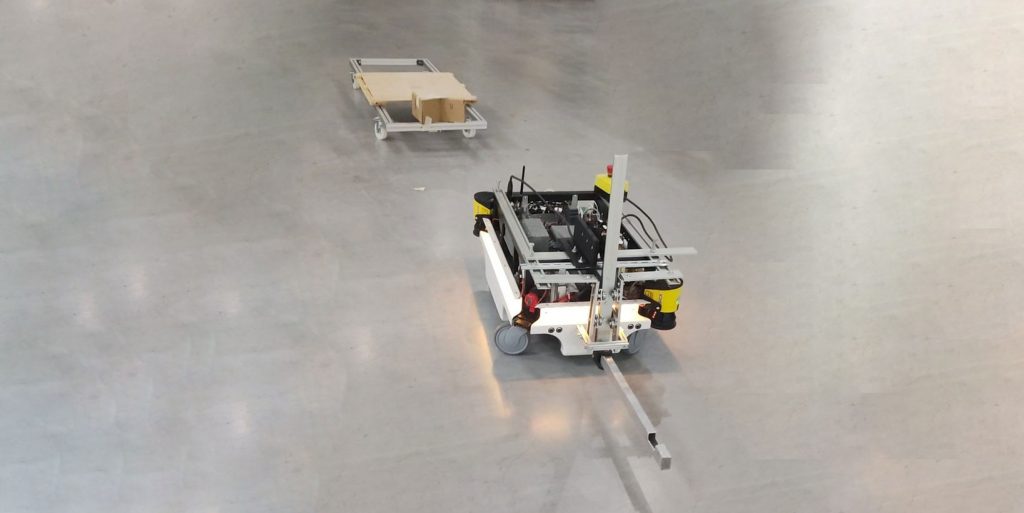
In this experiment, a tow hook is being designed for Metropolia’s MiR100 robot. With the hook, the robot could attach to Finlandia Hall’s existing furniture transport trolleys. Based on the first prototype, we will proceed to develop a better solution.
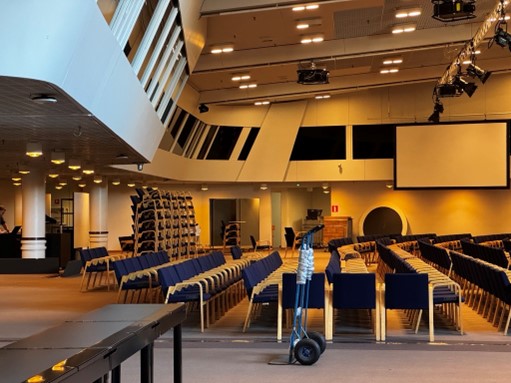
A device will be designed to enable chairs to be automatically transferred from the basement storage to halls, passing through the elevator.
Project status
In spring 2025, we decided to change our approach and created a carrying mechanism to attach to the MiR100 mobile robot, which is suitable for transporting chair stacks at Finlandia Hall. With this mechanism, the robot can automatically move stacks of chairs between the storage and the event hall. The production process began with modeling the mechanism, after which the parts were cut and welded together at Metropolia. The project was realized as a thesis, an innovation course, and an industrial design course with assistance from the project staff.


In the second phase of the project, a digital Proof of Concept (PoC) was built, which was expanded in spring 2025 into a prototype.
This new prototype is capable of:
– Automatically docking with stacks of chairs
– Autonomously transporting chair stacks between different rooms
– Navigating independently indoors according to event needs
Integrating Technology Design into Architecture
The design requirement for the cover was to conceal the lifting mechanism while allowing easy maintenance access for the robot. The structure also needed to support the lifting mechanism to minimize lateral movement and to stabilize lifting.
When designing the shell structure, it was essential to integrate it with the architecture of Finlandia Hall and honor the touch of Alvar Aalto. We studied Aalto’s works, details of Finlandia Hall, and the design of his furniture. This inspired us to incorporate iconic curved shapes and a sculptural look into the design, while aiming for a modern overall expression.
The shell concept went through several iterations before the final choices were made. The first version included parts made from bent sheet metal and thermoformed acrylic. Due to the limited project timeline, we decided to simplify the form and use plywood and 3D-printed plastic parts as the primary materials.


Construction Stages
With 3D printing, we were able to add structural strength and shape the rounded exterior surfaces, making the assembly easier and quicker.
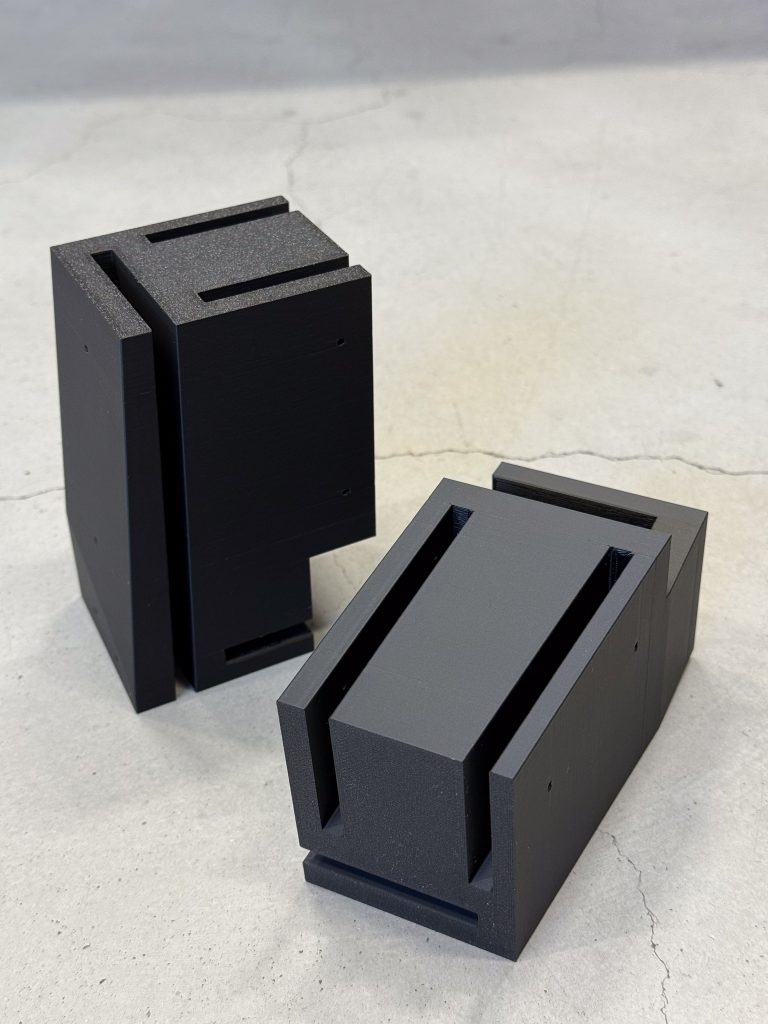


The plywood components consist of diverse shapes designed to fit precisely in the assembly. As a result, the outer shell could be attached directly to the frame without screws, facilitating maintenance.

After assembly, we filled all seams and sanded the surfaces in preparation for painting.

For finishing, we applied two layers of primer, the final paint surface, and a protective lacquer layer.

3D-printed guard rails protect the chairs and the surface of the lifting mechanism.

A subtle lighting element was added to give the robot a sense of presence. As a finishing touch, we applied two layers of primer, a final paint surface, and a protective lacquer layer.

Completed Project


Here is the final demo:


Finlandia Hall
Finlandia Hall is a central event venue in Helsinki, located on the shores of Töölönlahti, known for its modern architecture and excellent acoustics. It offers versatile facilities for both international and domestic conferences, concerts, and cultural events.