The project focuses on the development of robotics-based sewer repair tools and inspection devices. The aim is to improve the operation of these devices, enhance the efficiency of sewer pipe patching, and reduce manual labor. The purpose of the project is to speed up maintenance processes, improving the reliability and durability of the sewer network.
Technologies: Robotics, machine vision, 3D design
Significant progress has already been made in the development of sewer maintenance tools. The design of the towing unit has advanced, and the specifications for motors and control boards have been reviewed. Pneumatic sealing devices are also under development and have been improved to increase efficiency. A GoPro camera has been acquired for imaging purposes, and integration for real-time video transmission is being planned. Component procurement is partially complete, and development work continues with the building and testing of prototypes.
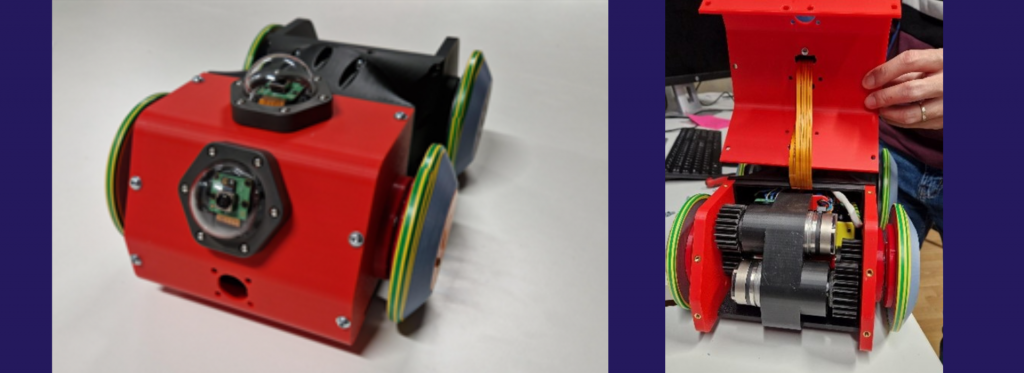
Sewerbot – Prototype 1
The project has not only focused on structural solutions but also on the development of the SewerBot user interface and control system. A computer and an embedded system built into the SewerBot were used for control. The robot could be operated via a computer or a PS4 controller. In the future, the goal is to have a portable control unit.
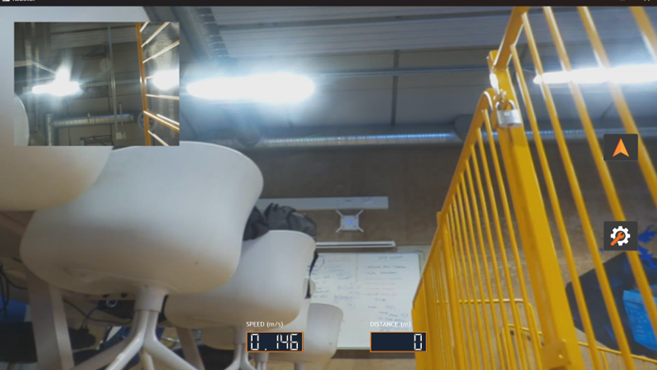
We have learned a great deal about the requirements and challenges posed by sewer environments. Our goal is to have a fully functioning SewerBot prototype ready by autumn 2025, so it can be tested in real sewer environments.
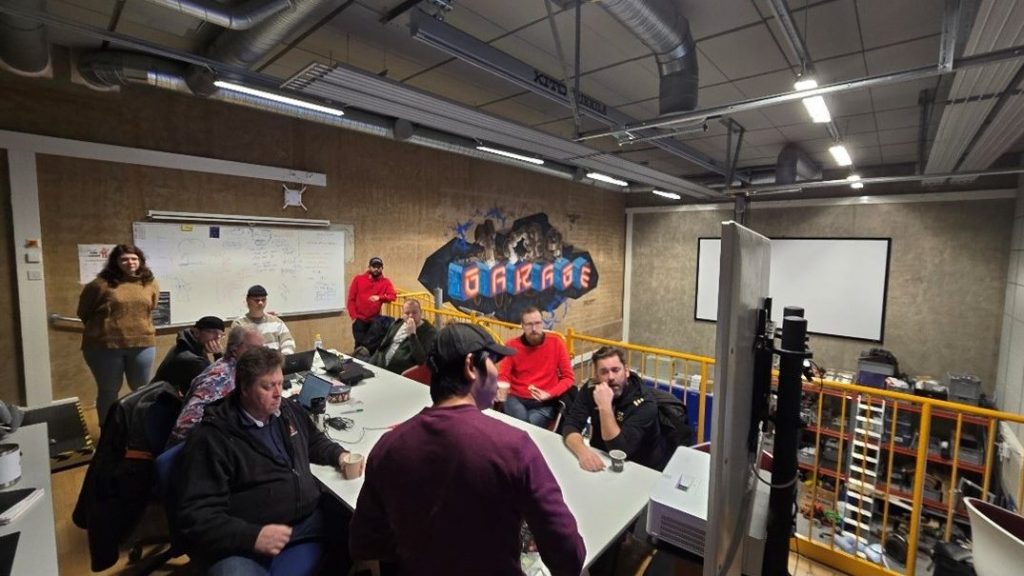
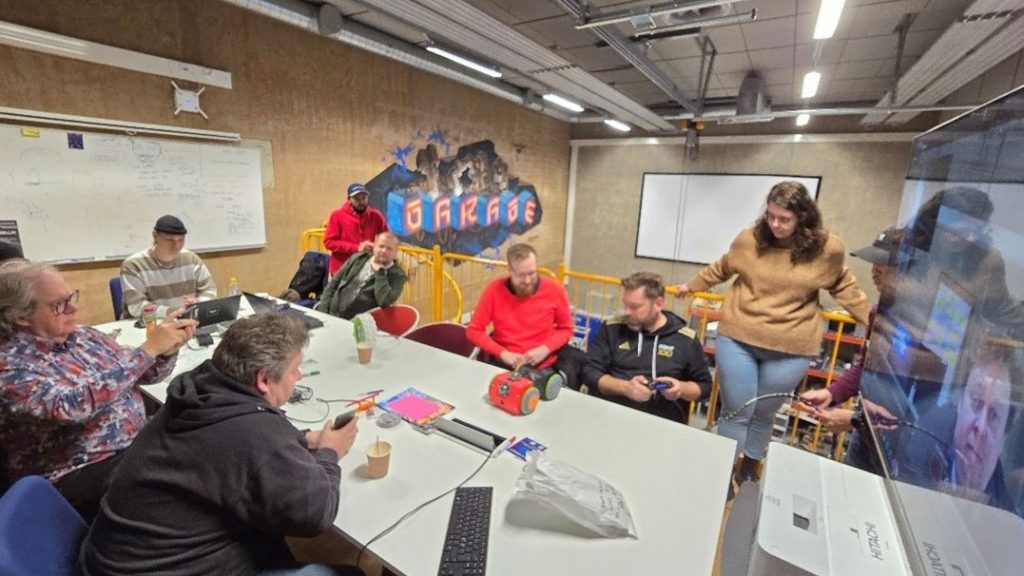
Image 3 & 4: Final meeting of the fall 2024 season held at Robo Garage. Students and staff from Underground City Oy.
In the picture: Jussi Kuikka from Underground City Oy controlling Sewerbot on a table with a PS4 controller
In spring 2025, the project team from Metropolia’s Robo-Garage continued its collaboration with Underground City Oy, focusing on the second prototype of the Sewerbot system developed for sewer network maintenance and repair.
Understanding the field environment
At the beginning of the project, the team thoroughly familiarized themselves with the sewer network maintenance process on-site. In particular, the user perspective—“the role of the maintenance worker”—became central to the design. This laid the foundation for user-oriented device development.


Field observations
Field observations highlighted device requirements: a compact structure, minimal number of components, and ease of maintenance.
Sewerbot – Prototype 2
The second-generation Sewerbot prototype was designed to be compact and simple in terms of components, with the goal of better reliability. The structure consists of a three-part frame which integrates the motors, control units, and camera systems.
The prototype was manufactured using 3D printing, allowing for rapid testing of the device’s functionality in simulated conditions.

New design starting points
Based on field experience, a three-part frame was designed:
· Side covers facilitate maintenance
· The central frame carries the motors, control system, and cameras
· Sealable flat surfaces ensure watertightness
The cameras were placed so that they can inspect both the pipe surfaces and the robot’s direction of travel. This improves documentation and safety.

Rapid Manufacturing – Immediate Testing
We made the prototype using 3D printing, which enabled instant testing of modifications without long lead times. The first tests were done in simulated conditions, assessing:
- Mobility inside the pipe
- Camera angles and lighting
- Frame durability and sealing solutions
Towards Field Pilots
Once the prototype operated successfully in laboratory conditions, we proceeded to test pipes. The first moment when Sewerbot moved steadily and captured images of the inner pipe surfaces as required was a significant one for the whole team.


Results and Future
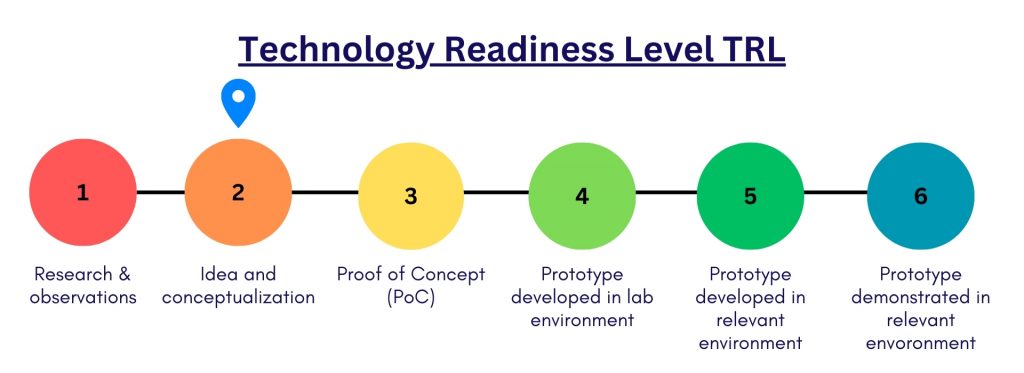
Prototype 2 marked a big leap: improved control, higher-quality imaging, and simpler maintenance. Our technology readiness level rose to TRL 4–5, and in autumn 2025, we will continue working with Underground City Oy towards the next stage of development.
Our team at ROBO-Garage worked hand in hand with UGC, and thanks to continuous feedback, development progressed faster than we predicted. This journey continues—and each step brings us closer to a finished field tool for Sewerbot.

Here is the final demo:
Underground City Oy
Underground City develops robotics-based solutions to enhance water treatment and sewer maintenance efficiency.